Posts

Showing posts with the label life

Summary | Not for Sale | Anon

Summary           ' Not for Sale ' by an anonymous writer is a heart touching story of a young couple madly in love who overcome all obstacles for the sake of their love and togetherness. The author was on a vacation when he came across a painting of a young woman . The painting was extraordinary and very expressive. He wished to buy it. But the woman in charge of the shop denied saying that the painting belonged to the owner of the shop and he did not wish to sell it. However, the painting was so touching that it kept haunting the author. Whenever he got a chance, he would drive all the way through Taos and to the gallery and see the painting. Finally, the woman shopkeeper told him the story behind the painting. Two young students, a man and a woman, fell madly in love while they studied painting and arts in New York, far from their homes . They decided to get married and have a promising career in painting.           How...
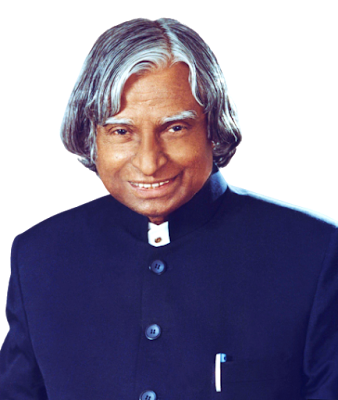
Tomorrow’s Citizens | Dr. A.P.J. Abdul Kalam | Part - 2

Image
Tomorrow’s Citizens Knowledge-Sweat-Perseverance           One cannot stop at thinking and asking questions. There is a need to act to solve the problems and that requires hard work and perseverance.        As President and earlier as a scientist, life has taught me the importance of three qualities; knowledge, sweat and perseverance.     O ur country has a very bright future and all of us, especially the children. who will be the leaders of tomorrow have to work hard. The vision of a Developed India will not come on its own. It will not be gifted to us by someone but we have to work and work hard to achieve the goals which we have set for ourselves. It is only through sweat and toil that we will be able to make India stand proudly among the community of developed nations. If India is to become developed by 2020, it will do so only by riding on the shoulders of the young. For Summary of this lesson, Please click the below l...

Tomorrow’s Citizens | Dr. A.P.J. Abdul Kalam | Part - 1

Tomorrow's Citizens Our Greatest Wealth           India is poised in the mission of transforming itself into a developed nation and by the year 2020. The prime resource through which this transformation is possible is the 540 million youth who are below the age of twenty-five.           Children and youth are the picture of a nation's future. They are our hope for tomorrow. The youth in India constitute a sizable, vibrant and resourceful segment of our society which has a burning desire to scale greater heights. If their energies are properly channeled, they will unleash a momentum that would propel the nation on the fast track to development. We need to carefully nurture this vast and precious human capital by making it a focal point of our planning and development process. Encompassing the needs. rights and the expectations of youth to the central stage of development should be our priority.         ...

Summary || Still I Rise || Maya Angelou

The poem 'Still I Rise' conveys to the readers the need for standing tall against all odds and fighting till the very end. It is an emotional poem addressed to the white oppressors of black people. The poet wants the white people to realize that the black will no longer bend down to the atrocities of the whites. Without reacting to the harshness, she requests the blacks to stand up and walk with their head held high. It invokes a feeling of confidence in the blacks to not surrender to the oppression of the blacks. The poem is both political and highly personal. The poet is responding to decades and even centuries of oppression and mistreatment. The readers can feel the sympathy with her spirited rejection of further oppression. The poet considers herself as the dream and hope of the slaves who will be freed from the bondage of the whites. For Whole Poem of "Still I Rise", Please click the link 'Poem'  >> POEM The first two lines are about writing. She us...

The Toys || Coventry Patrome

THE TOYS - Coventry Patrome My little Son, who look'd from thoughtful eyes And moved and spoke in quiet grown-up wise, Having my law the seventh time disobey'd, I struck him, and dismiss'd With hard words and unkiss'd, His Mother, who was patient, being dead. Then, fearing lest his grief should hinder sleep, I visited his bed, But found him slumbering deep, With darken'd eyelids, and their lashes yet From his late sobbing wet. And I, with moan, Kissing away his tears, left others of my owns; For, on a table drawn beside his head, He had put, within his reach, A box of counters and a red-vein'd stone, A piece of glass abraded by the beach And six or seven shells, A bottle with bluebells And two French copper coins, ranged there with careful art, To comfort his sad heart. So when that night I pray'd To God, I wept, and said: Ah, when at last we lie with tranced breath, Not vexing Thee in death, And Thou rememberest of what toys We made our joys, How weakly und...

Young Pele, Soccer Player

Image
Young Pele, Soccer Player - Clare and Frank Gault      A small boy danced barefoot out into the street and began kicking at the air as if he were kicking a soccer ball. But there was no ball. Nearby, a group of men and boys huddled around a radio, listening to a local soccer game Bauru (bou roo’) against Sau Carlous (sou kar loos) a neighboring town in southeastern Brazil. The year was 1948.           One of the men smiled as he watched the boy acting like a real scooter player. The boy was eight years old. His name was Edson Arantes do Nacimento (ed’ song u ran’ chas doo na sc men too), but his friend called him Pele(pele’).           Pele kept kicking at the air. He could imagine himself out on the soccer field, dribbling the ball downfield with his feet, passing it to a teammate, then taking a pass in return and kicking a goal.           Suddenly, the radio announcer became excit...

On Ahimsa [October 1916]

On Ahimsa [October 1916]            -M.K. Gandhi [.  .  .] There seems to be no historical warrant for the belief that an exaggerated practice of ahimsa synchronized with our becoming bereft of many virtues. During the past fifteen hundred years, we have as a nation given ample proof of physical courage, but we have dominated by love of self instead of love of country. We have, that is to say, been swayed by the spirit of irreligion rather than of religion. I do not know how far the charge of unmanliness can be made good against the Jains. I hold no brief for them. By birth I am a Vaishnavite, and was taught ahimsa in my childhood. I have derived much  religious benefit from Jain religious works, as I have from scriptures of the other great faiths of the world. I owe much to the living company of the deceased philosopher Raja Chand Kavi who was a Jain by Birth. Thus though my views on ahimsa are a result of my study of most of the faiths...

Starting from Mile Zero || Preety Sengupta

Starting from Mile Zero   - Preety Sengupta One of many beautiful images of a place visited comes floating out me - that of the confluence of two rivers.On a hilly edge of the high road there is a small shrine representing Lord Shiva: a lingam, a trishul, and a tapered flag fluttering in the air. A steep flight of narrow steps descends to a slippery landing. The place is Rudraprayag in Garhwal district, the rivers are Mandakini and Alaknanda - one dark, deep, deceptively calm; the other foamy, fair, playful. The two distinctive waters stay separate for some distance, then slowly merge to make a fuller flow. For about two decades my life has concentrated on two things: words and the world. In other words, writing and travelling. Like the two rivers, these two activities are very distinct - one requiring solitude, concentration and being indoors; the other necessitating determination, patience and interactions with strangers all the time. Rather than think of these as impossible oppo...

Summary || The Portrait Of The Lady || Khushwant Singh

By Khushwant Singh,           The Portrait of a Lady’ is written in first person and is in the biographical mode. In this story, the writer gives a detailed account of his Grandmother with whom he had a long association. Khushwant Singh recalls his Grandmother as short, fat and slightly bent. Her silver hair was scattered untidily on her wrinkled face. She hobbled around the house in white clothes with one hand resting on her waist and the other telling the beads of her rosary. Khushwant Singh remembers her as not very pretty but always beautiful. He compares her serene face to that of a winter landscape, During their long stay in the village, Grandmother woke him up in the morning, plastered his wooden slate, prepared his breakfast, and escorted him to school. While he studied alphabets, she read the scriptures in the temple attached to the school. On their way back home she fed stale chapattis to stray dogs. The turning point in their relationship came w...